
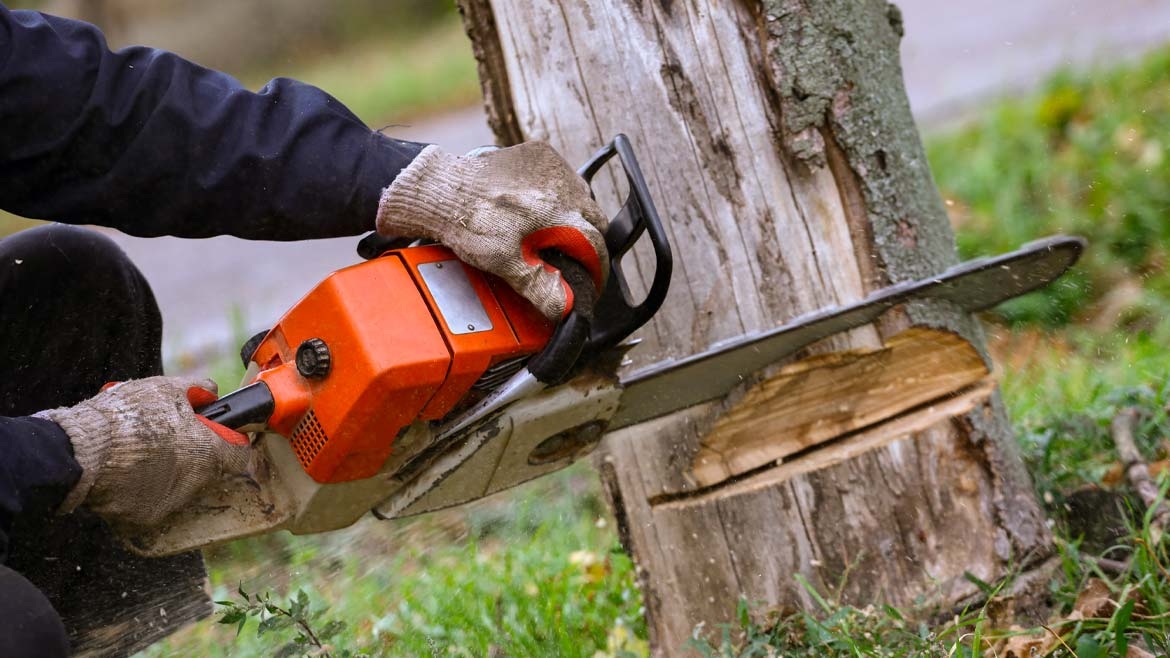
Tree pruning and tree felling are jobs generally best left to a professional. We’ve done dozens of similar jobs over the years and we have the correct equipment to carry out these services safely and efficiently. This ensures minimal fuss to your garden and neighbours.
For more information on tree pruning or tree felling, get in touch with us today.
We have over a decade of experience in tree pruning and tree felling, so we’ve put together a 7-step guide to pruning a tree. Tree Felling can be dangerous if you attempt it on your own, particularly with larger trees, so we always recommend taking advice from fully qualified experts like us.
Our 7-Step Guide to Pruning a Tree
There are numerous reasons for pruning a tree but it can still be a daunting task. Timely and well-considered pruning keeps trees healthy, encourages a well-shaped canopy, and helps to control size. To do this correctly, it can involve a series of steps.
1. Get The Correct Equipment
First off, you need all the correct equipment – this can range from simple tools such as secateurs to more dangerous power tools such as chainsaws. You’ll also need a ladder, harness, and other safety gear if you’re working at height. This is where a professional would generally be advised.
2. Know Your Ultimate Goal
Knowing what goal want to achieve by pruning can save a lot of effort further down the line. Is it to remove shade or create more space under the canopy? Or is it to remove some lower branches? It’s worth knowing what you want the result to be well before you start work.
3. Remove Any Dead Branches
The first pruning should involve removing dead, diseased, and damaged branches. We also recommend removing branches that are touching or rubbing together to avoid any tree-related diseases.
4. Assess From Every Angle
Take the time to assess your tree from different angles throughout the process. You can always take more off the tree but you can’t put it back on! Our approach to tree pruning is to remove a maximum of 20% of the tree canopy in one go. Harder pruning can encourage rapid upright growth which is the opposing result if you’re seeking to reduce or thin your tree canopy.
5. Be Methodical
It’s best to remove larger branches in methodical stages to avoid overcutting your tree and to maintain a safe environment. Some branches can be incredibly heavy and may damage other parts of the tree that you want to keep. Taking a careful and considered approach here enables branches to come down in the right way and at the right time.
6. Pruning Branches
Pruning branches that are less than 1” in diameter is possible with secateurs or loppers. Always cut about 0.5cm above a healthy bud to prevent it from dying back. In our experience, it’s best to cut to an outward-facing bud or branch to encourage subsequent growth which will form a well-shaped canopy.
7. Re-evaluate Your Efforts
Review your efforts regularly so you can evaluate your progress. This will help you to stick to your original plan so you can reach your desired end goal. It’s worth checking your tree from all angles so you can spot any branches or sections you may have missed.
Sound complicated?
Tree pruning and tree pruning can be complicated. Fortunately, we’ve pruned hundreds of trees throughout Bournemouth, Poole, and Christchurch, so we know how time-consuming it can be. It can also be quite a risky job, so we’d recommend getting in touch to discuss how we can help.
Request a quote today and we’ll be happy to talk you through the next steps.